








How We Test and Ship 6 Caterpillar 157-3705 ECMs to a US Fleet Customer — The Full Process

Not every ECM order is a single-unit emergency repair. Some customers know exactly what they need — multiple units, tested, verified, and ready to program. This post documents a bulk order of six Caterpillar 157-3705 ECMs for a US-based customer, covering how we test each unit against a real engine serial number before shipping them out as clean, blank modules ready for field programming.
What is the Caterpillar 157-3705 ECM?
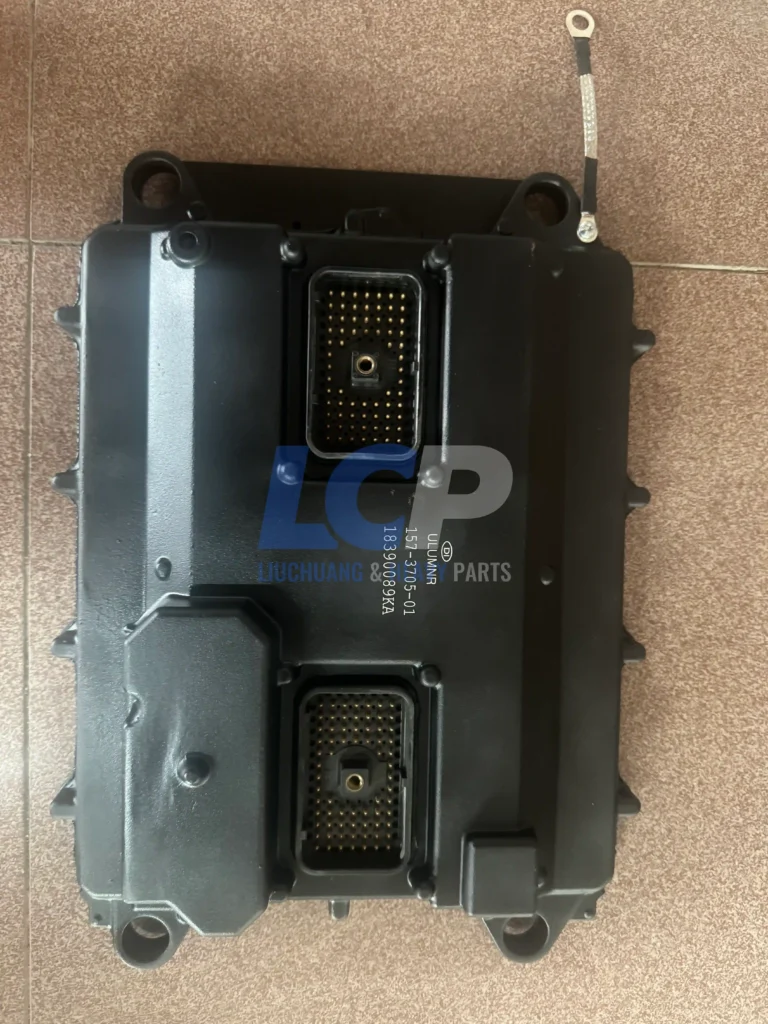
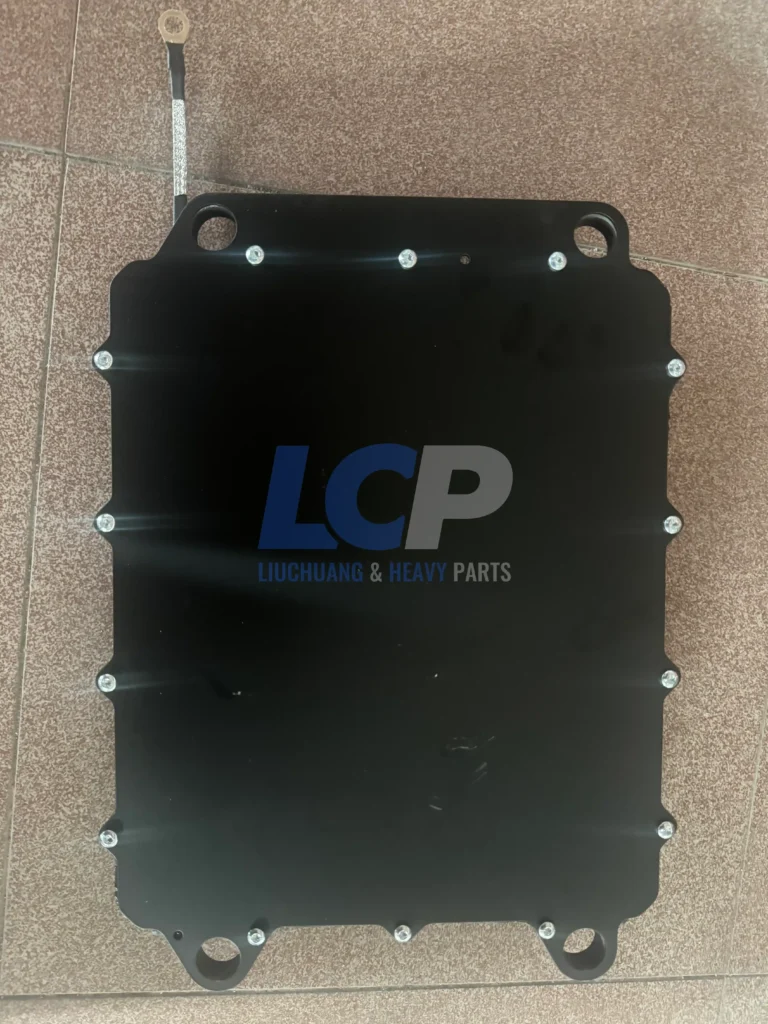
The 157-3705 (also referenced as 157-3705-01 in the Delphi/ULUMNR manufacturing system) is an Engine Control Module used across several Caterpillar machine and engine platforms. It is recognizable by its dual-connector face: a large upper rectangular connector housing and a smaller lower unit, both using gold-pin arrays sealed with a center locking bolt. The rear of the unit is a flat black aluminum heat-dissipation plate secured with twelve perimeter bolts, with a short braided grounding strap terminating in a ring lug.
The all-black housing distinguishes the 157-3705 from earlier white or silver Cat ECM housings such as the 240-5302 series. It is a more compact, fully sealed unit suited for demanding off-highway, industrial, and machine applications where moisture and vibration resistance are critical.
| Part Number | 157-3705 / 157-3705-01 |
| Manufacturer | OEM NEW |
| Unit Serial (this batch) | 18390089KA |
| Connector type | Dual — large upper (70-pin) + small lower connector |
| Rear housing | Black aluminum heat plate, 12-bolt perimeter seal |
| Grounding | Braided strap with ring lug terminal |
| Test ESN used | 2WS14957 |
| Quantity in this order | 6 units |
| Destination | United States |
| Shipping method | International Express ( China to US) |
Why a US customer orders 6 units at once
Single-unit ECM orders are common for breakdown repair situations. Bulk orders like this one tell a different story. A fleet operator, dealer, or independent repair shop ordering six units simultaneously is almost always building an exchange stock or service inventory. Rather than waiting days or weeks for a replacement to arrive during a machine-down situation, they keep programmed or blank spares on the shelf and swap them at the point of failure.
For the 157-3705 specifically, keeping exchange units on hand is a well-established practice because Cat ET programming on this platform is straightforward once you have the engine serial number and a saved configuration file. A technician can have a machine back online in under an hour if the replacement ECM is already on site.
Our testing process: ESN 2WS14957
Before any unit leaves our facility — whether it's one ECM or six — each module goes through a verification and programming test using a real engine serial number provided by or assigned to the customer. For this order, that serial was 2WS14957.
The test workflow using Cat Electronic Technician is as follows:
- Connect— Caterpillar Comm Adapter II is connected to the ECM on the bench via the primary data link. Cat ET 2025A is launched and the adapter is confirmed as the active device.
- Flash the ECM— The correct software flash file for the 157-3705 and the target application is loaded. This confirms the ECM hardware accepts programming and that the internal memory is intact.
- Load ESN configuration— The engine serial number 2WS14957 is entered or the corresponding configuration file is loaded. Cat ET populates all identification parameters: equipment ID, engine serial, rating number, sensor parameters, and injector trim codes if applicable.
- Verify all parameter sections— Each section of the ECM Replacement screen is confirmed as "Downloaded": ECM Identification, Engine/Gear Parameters, Optional Sensor Parameters, Maintenance Parameters, System Settings, and Injector Codes Calibration.
- Confirm communication health— The ECM is queried for active or logged fault codes. A clean, healthy unit shows no active faults. Any stored faults from bench handling are cleared.
- Reset to blank— After testing, each unit is reset to an unprogrammed state using the Cat ET "Initialize ECM" or equivalent factory-reset procedure. This ensures the receiving technician starts from a clean slate and can program the ECM to their specific engine without any residual configuration data interfering.
This test-then-reset approach gives the customer confidence that every unit in the box is hardware-verified and communication-capable before they ever connect it to their machine.
Packaging and shipping 6 ECMs internationally
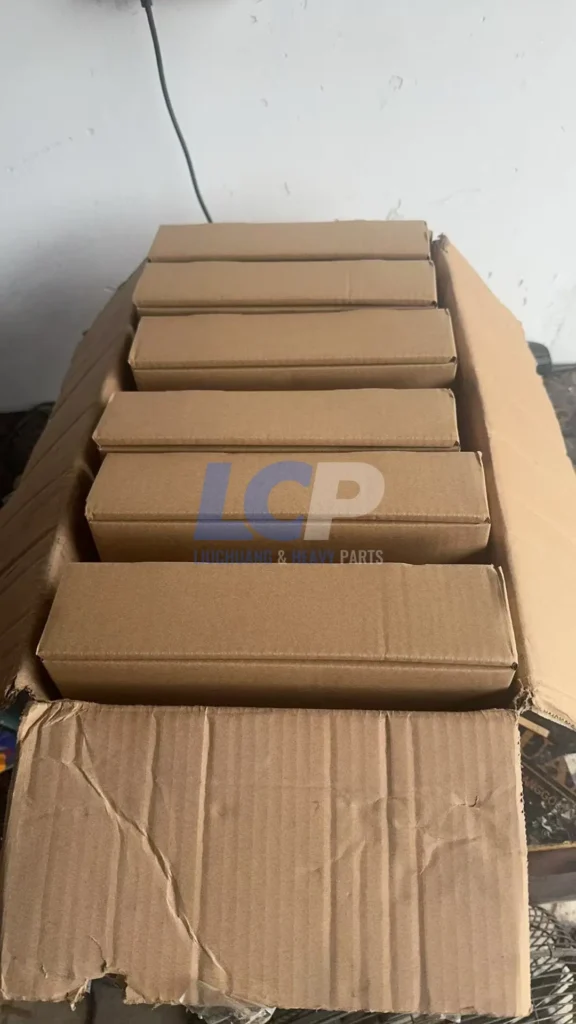
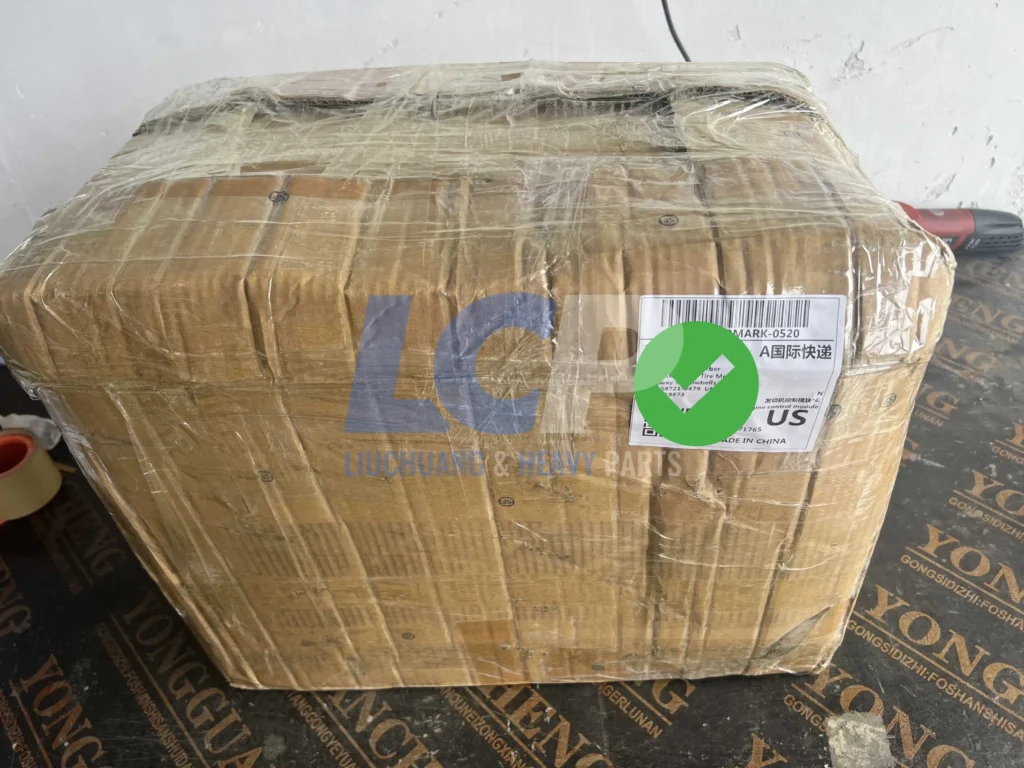
Each of the six ECMs was individually boxed in a fitted cardboard carton — visible in the open-box photo as six uniform units lined up in a single outer master carton. Individual boxing prevents connector damage and protects the grounding strap ring lug from bending in transit. The six inner boxes were then packed into a reinforced outer carton, wrapped in stretch film for moisture and tamper resistance, and sealed with the international shipping label.
The shipping label on the outer carton identifies the contents as “engine control module" — an accurate and standard customs declaration for Cat ECMs shipping from China to the United States. The reference code MARK-0520 on the label serves as the internal order tracking reference for this customer batch.
Stretch-wrapped outer cartons are standard practice for multi-unit electronic shipments: the film layer keeps individual boxes consolidated, adds a secondary moisture barrier, and makes tampering immediately visible upon arrival.
What the customer receives
Six 157-3705-01 ECMs, each:
- Hardware-tested and confirmed to communicate via Cat ET
- Flashed and verified against ESN 2WS14957
- Reset to blank / unprogrammed state for field programming
- Individually boxed, stretch-wrapped, and shipped express international
When these units arrive, the customer's technician connects Cat ET, loads their engine-specific configuration file, runs the ECM Replacement procedure, and has a fully operational module — with no guesswork about whether the hardware itself is functional.
Key takeaways for fleet operators and dealers
- The157-3705is a serviceable, programmable ECM — sourcing blanks and programming in-house reduces downtime versus waiting on dealer supply chains
- Always test ECMs against a known ESN before adding to exchange inventory — hardware failures are rare but do exist in aftermarket units
- Resetting to blank before shipment prevents stale configuration data from causing Cat ET conflicts during the customer's programming session
- Bulk orders of 6+ units qualify for consolidated master carton shipping, which reduces per-unit freight cost significantly on international express routes