







10R-4092 ECM Buying Guide: Cross-Reference, Programming & Testing (240-5304)
Key Takeaways
- The 10R- prefix identifies a remanufactured exchange controller, not a different hardware family.
- A part number alone does not confirm fit. The engine serial number is the deciding data point.
- An unprogrammed controller will not start your machine. Software must match the serial number it is going onto.
- Ask for programming screenshots and bench test evidence before the unit leaves the warehouse.
- Budget separately for on-machine parameter setup, which still requires dealer-level diagnostic software.
What Is the 10R-4092 ECM?
The 10R-4092 is a remanufactured electronic control module supplied as an aftermarket replacement for Caterpillar controllers carrying that number. It is the computer that governs fuel delivery and engine protection on electronically controlled C15 installations.
In service, the controller reads inputs from the speed/timing sensors, coolant temperature and oil pressure sensors, throttle position sensor, and atmospheric pressure sensor. It converts those inputs into injector command signals, manages cold-start behavior, enforces derate and shutdown strategies, and broadcasts status and diagnostic data over the J1939 data link so a service tool or machine display can read it.
Two practical consequences follow. First, a failing controller rarely presents as one clean symptom; it usually appears as several unrelated codes, intermittent no-starts, or a machine that derates with no obvious mechanical cause. Second, this is not a bolt-on mechanical part. It carries software, and that software has to belong to your specific engine.
Symptoms That Point Toward the Controller
| Symptom | Rule Out First | Points to ECM When |
|---|---|---|
| No communication with service tool | Data link wiring, connector pins, adapter and cable | Link tests good at the connector but the module stays silent |
| Crank, no start | Fuel supply, speed/timing sensors, injector wiring | Injector command signals are absent with valid engine speed input |
| Multiple unrelated fault codes | Sensor supply voltage, shared grounds, harness chafe | Codes persist across several circuits after wiring is verified good |
| Intermittent shutdown or derate | Battery voltage, charging system, connector corrosion | Fault repeats with supply voltage confirmed stable under load |
Pro Tip: Check power supply integrity and ground quality before condemning any controller. A large share of returned modules across this industry turn out to be voltage-drop, pin-fretting, or corrosion problems rather than internal failures.
10R-4092 vs. 240-5304: Reading the Cross-Reference Correctly
Both numbers describe the same controller position, but they sit at different layers of the reference chain. The 10R- prefix designates a remanufactured exchange unit, while the 240-series number designates the control group it replaces.
This is where most ordering errors begin. A buyer reads one number from the machine parts manual, a second from the physical controller, and a third from an online listing, then assumes two of them must be wrong. Usually none of them are wrong.
| Reference | What It Indicates | Where You Will See It |
|---|---|---|
| 10R-4092 | Remanufactured exchange controller number | Printed on units already replaced once; most common in resale listings |
| 240-5304 | Control group number cross-referenced to 10R-4092 | Parts manuals, build documentation, supplier catalogs |
| Machine model | Application family only, such as 140H or 966G Series II | Machine data plate; never sufficient on its own |
| Engine serial number | The value that determines the correct software file | Engine information plate on the block or valve cover tag |
The working rule we give every customer: photograph the label on the controller you are removing and treat that photograph as the primary source. Catalog numbers guide the search. The physical label settles it.
All manufacturer part numbers shown here are used for reference and compatibility identification only.
How to Confirm Fit Before You Spend a Dollar
Fit is confirmed by engine serial number, not by machine model. Controllers in this family appear across several C15-powered platforms, and the correct software file can change across serial breaks within the same model line.
Work through these five steps in order before you release payment:
- Record the engine serial number. It is stamped on the engine information plate, typically on the block near the front or on a valve cover data tag. Copy every character exactly, including letters.
- Photograph the existing controller label. Capture the full part number, unit serial number, and any software revision markings without glare or motion blur.
- Note the machine model and serial prefix. This narrows the software family and flags mid-production changes.
- Inspect the connectors. Confirm connector count and keying against the listing photographs before purchase, not after delivery.
- Send all four items to your supplier in one message. A supplier who can actually program should confirm software availability for your serial number in advance.
Warning: Never order on machine model alone. Two visually identical machines built months apart can require different software files, and a mismatched flash produces a no-start condition that looks exactly like a defective unit.
Order Walkthrough: A Recent U.S. Shipment
A recent order from a United States customer shows what a clean process looks like end to end. The buyer needed a 10R-4092 replacement and supplied engine serial number 9HP00823 together with a photograph of the original controller label at the quotation stage.
Software availability for that serial number was confirmed before invoicing. The unit was then flashed to match the engine serial number, verified on the bench, documented at both the programming and packing stages, and dispatched by DHL with tracking issued the same day.
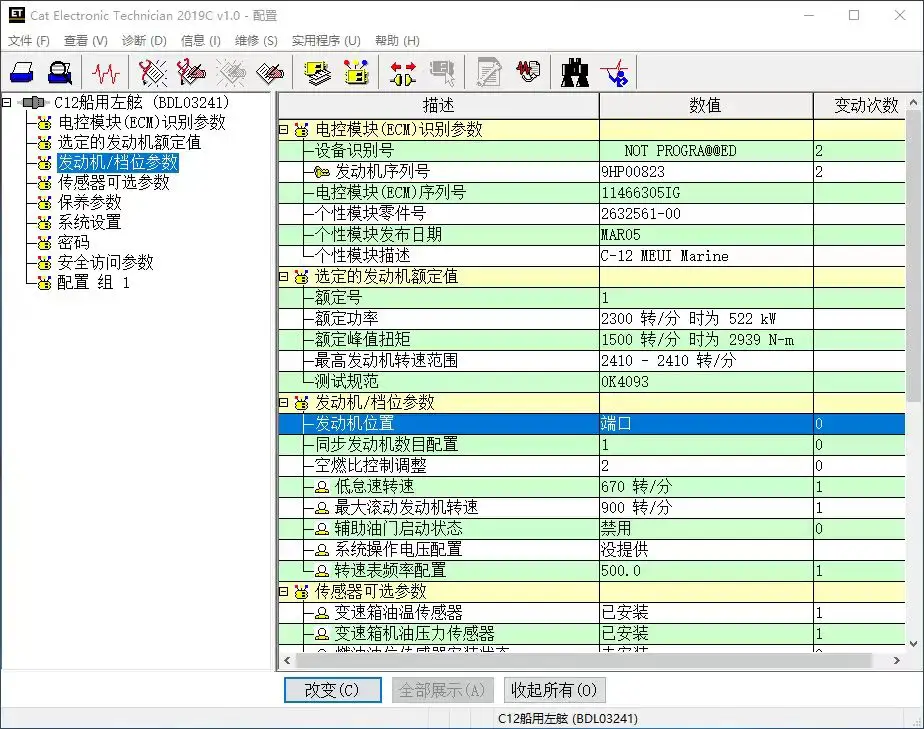
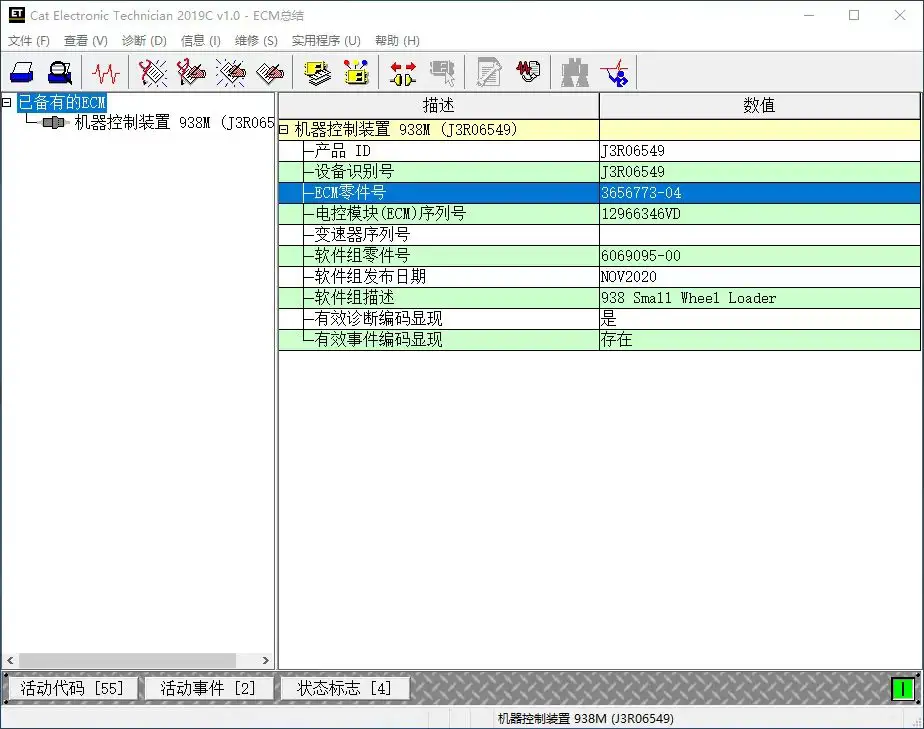
Programming and verification stage: software matched to engine serial number 9HP00823 before dispatch.
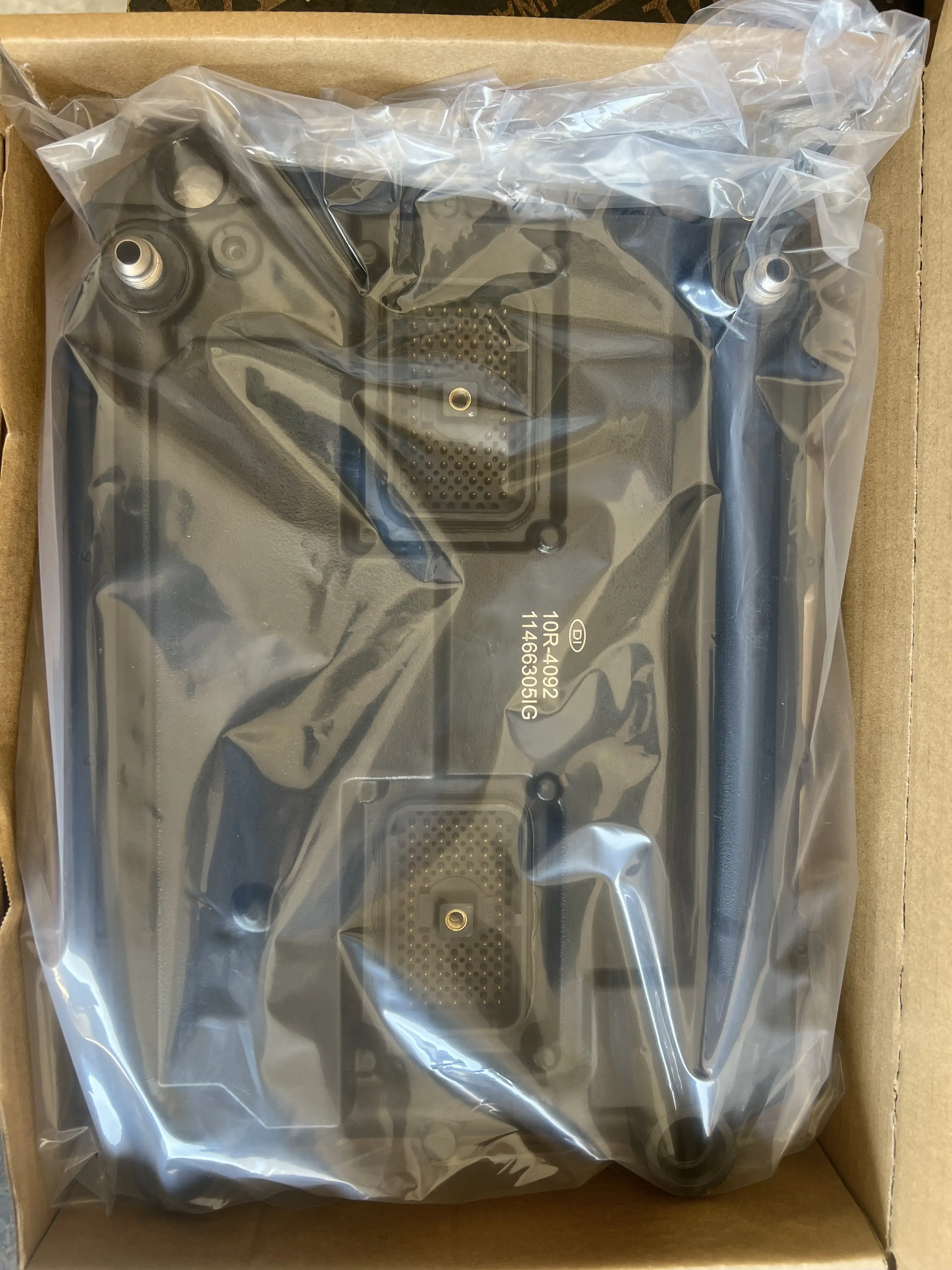
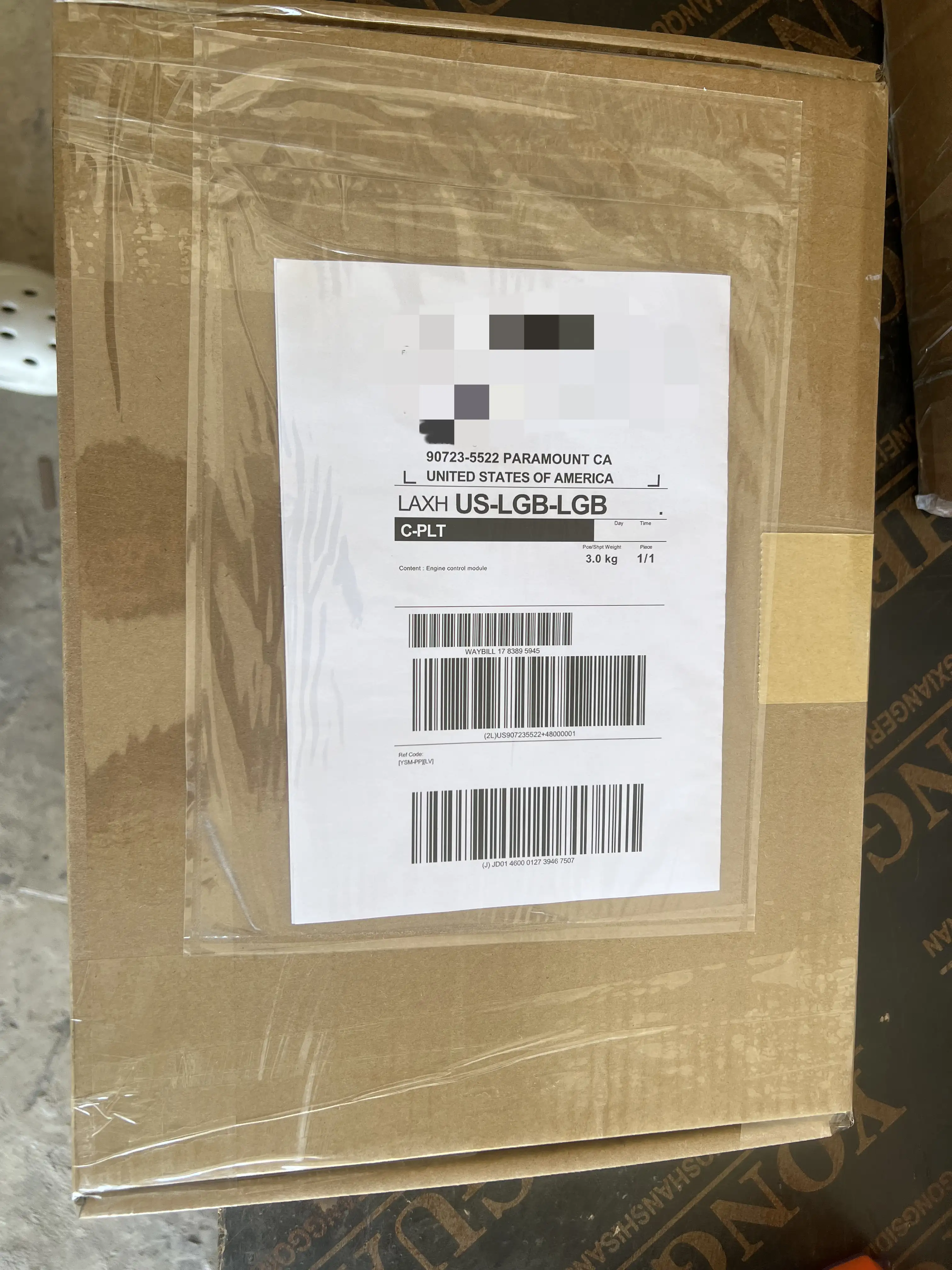
Packing and dispatch stage: anti-static protection, cushioned outer carton, DHL label and tracking issued the same day.
The documentation matters more than it first appears. When a technician opens the box already knowing the unit was flashed to the correct serial number and tested, troubleshooting after installation starts from a much narrower list of possible causes.
Why Pre-Shipment Programming and Bench Testing Matter
Because a blank controller cannot run your engine, and a used controller still carries another machine’s software. Either condition produces a machine that cranks but will not start, which is indistinguishable from a hardware failure to anyone standing in the shop.
Bench testing addresses a different risk. It confirms the module powers up, communicates over the data link, and holds its programmed state before the unit crosses an ocean. Discovering a fault at that stage costs a supplier one hour. Discovering it after installation costs a fleet a day of downtime plus return freight.
Handled Before Shipment
- Software flashed to your engine serial number
- Power-up and data link communication verified
- Connector and housing condition inspected
- Programming and packing documented with photographs
Still Required On the Machine
- Machine-specific parameter entry
- Equipment identification data
- Injector trim or calibration codes where applicable
- Post-installation code clearing and road or load verification
Plan for the right-hand column. Pre-shipment programming removes the largest variable, but final parameter setup on the machine still needs dealer-level diagnostic software and a technician who knows the application. Suppliers who promise a true plug-and-play outcome with no on-machine work are overstating what any aftermarket controller can do.
New, Used, or Remanufactured: Which Makes Sense?
For machines past their first decade of service, a tested remanufactured controller usually gives the best balance of cost, availability, and risk. New-production units carry the highest cost and often the longest lead time, while untested salvage units carry the lowest price and by far the highest failure exposure.
| Factor | New Production | Tested Remanufactured | Untested Salvage |
|---|---|---|---|
| Relative cost | Highest | Moderate | Lowest |
| Availability for legacy models | Limited or discontinued | Generally good | Inconsistent |
| Programmed to your serial number | Dealer service required | Available before shipment | Rarely offered |
| Failure risk after install | Low | Low when bench tested | High |
| Best suited to | Late-model, high-utilization assets | Fleet repair and downtime recovery | Bench spares and diagnostics only |
A correctly remanufactured and properly programmed controller is intended to restore factory-specified performance. Treat any listing that promises added horsepower, extra torque, or fuel savings beyond original specification as a reason to look elsewhere.
Pre-Order Checklist: What to Send Your Supplier
Send these six items in a single message and you will usually get a firm answer within one business day instead of a three-day exchange of questions.
- Engine serial number transcribed exactly from the information plate
- Clear photograph of the existing controller label
- Machine model and serial prefix, for example 140H or 966G Series II
- Fault codes currently active, with SPN and FMI values if available
- What has already been tested, including wiring, grounds, and supply voltage
- Destination address and required delivery window
If you have those details ready, you can send them to our technical team for a compatibility check before committing to an order.
Shipping, Lead Time, and Customs
Confirmed orders are dispatched within 24 to 48 hours by DHL, FedEx, or UPS, with tracking issued on the day of handover. Express transit to most United States destinations typically runs three to six business days depending on service level and destination state.
Programming adds a short step ahead of dispatch. When an engine serial number is supplied at the quotation stage, flashing and bench verification are completed within the same 24 to 48 hour window rather than extending it.
Import duties, taxes, and customs clearance charges are determined by the destination country and are the responsibility of the buyer unless agreed otherwise in writing before dispatch. Ask for the declared value and commodity description in advance if your customs broker requires specific documentation.
Frequently Asked Questions
Is 10R-4092 the same as 240-5304?
They refer to the same controller position through different reference layers. The 10R- number identifies the remanufactured exchange unit, while 240-5304 is the control group number it cross-references to. Always verify against the label on your existing module.
Will a 10R-4092 ECM work without programming?
No. A controller without software matched to your engine serial number will not start the engine. This is the single most common reason a correctly specified replacement appears to arrive faulty.
Which machines use this controller?
It is commonly found on C15-powered machines including the 140H motor grader and 966G Series II wheel loader. Application lists are a starting point only; confirm by engine serial number rather than machine model.
Do I still need a dealer after installing a programmed ECM?
Usually yes, for final parameter setup. Machine identification data, injector calibration codes where applicable, and post-installation verification require dealer-level diagnostic software even when the software flash is already correct.
How do I find my engine serial number?
It is stamped on the engine information plate, most often on the block near the front of the engine or on a data tag at the valve cover. Photograph it rather than transcribing by hand to avoid character errors.
What if the replacement still will not start the machine?
Recheck supply voltage, grounds, and connector seating first, then confirm the flashed software matches the serial number supplied. Programming records from the supplier let you eliminate the software variable in minutes rather than hours.
Can a remanufactured controller improve engine output?
No. A correctly programmed replacement restores factory-specified performance. Any supplier claiming power or fuel economy gains beyond original specification is describing something you should not install on a working fleet machine.
Final Word
Buying a 10R-4092 controller is a verification exercise, not a shopping exercise. Get the engine serial number and the original label photograph right, and the rest of the transaction becomes routine.
Require programming to your serial number and documented bench testing before dispatch. Those two conditions eliminate the majority of failed installations we see reported across this product category, and they cost nothing extra when a supplier is set up to do the work properly.
Need a 10R-4092 ECM Programmed to Your Engine Serial Number?
Aftermarket replacement for Caterpillar 240-5304 / 10R-4092 controllers, suitable for C15-powered 140H and 966G Series II applications. Flashed to your engine serial number, bench tested and photographed before packing, then dispatched within 24 to 48 hours via DHL, FedEx, or UPS with same-day tracking.
Check Availability & Pricing →