








240-5309 ECM for Perkins 2806C Engines: Matching, Programming & Shipment Record
Key Takeaways
- A photograph of the engine nameplate is the single most useful thing you can send a supplier.
- Software is flashed to the engine serial number before shipment. Equipment ID stays unset for you to enter on site.
- Verify that the module serial number on the physical label matches the serial reported by the service tool.
- Genset applications carry rating data — frequency, speed, kVA, duty — that must match the set, not just the engine.
- Active codes on a bench-connected module are normal. Sensors and actuators are not present.
What the 240-5309 Controls
The 240-5309 is an engine control module supplied as an aftermarket replacement for Perkins 2806C and related electronically controlled installations. It governs fuel delivery and engine protection, and on generator set applications it also holds the rating configuration that defines how the engine behaves under load.
On a genset the module does more than run the engine. It stores the selected rating, the target frequency and speed, the droop and synchronisation settings, and the acceleration profile that determines how the set picks up load. Those values are not decoration; they are what makes a 550 kVA standby set behave like a 550 kVA standby set rather than a generic diesel engine.
This matters when sourcing a replacement. A module that boots and communicates is only halfway there. It also needs the correct software for the engine serial number and, on a genset, the correct rating configuration for the set it is going into.
It Starts With the Engine Nameplate
Every correct order in this category begins with one photograph. The customer on this order sent an image of the engine nameplate before anything else was discussed, and that single image settled the specification.
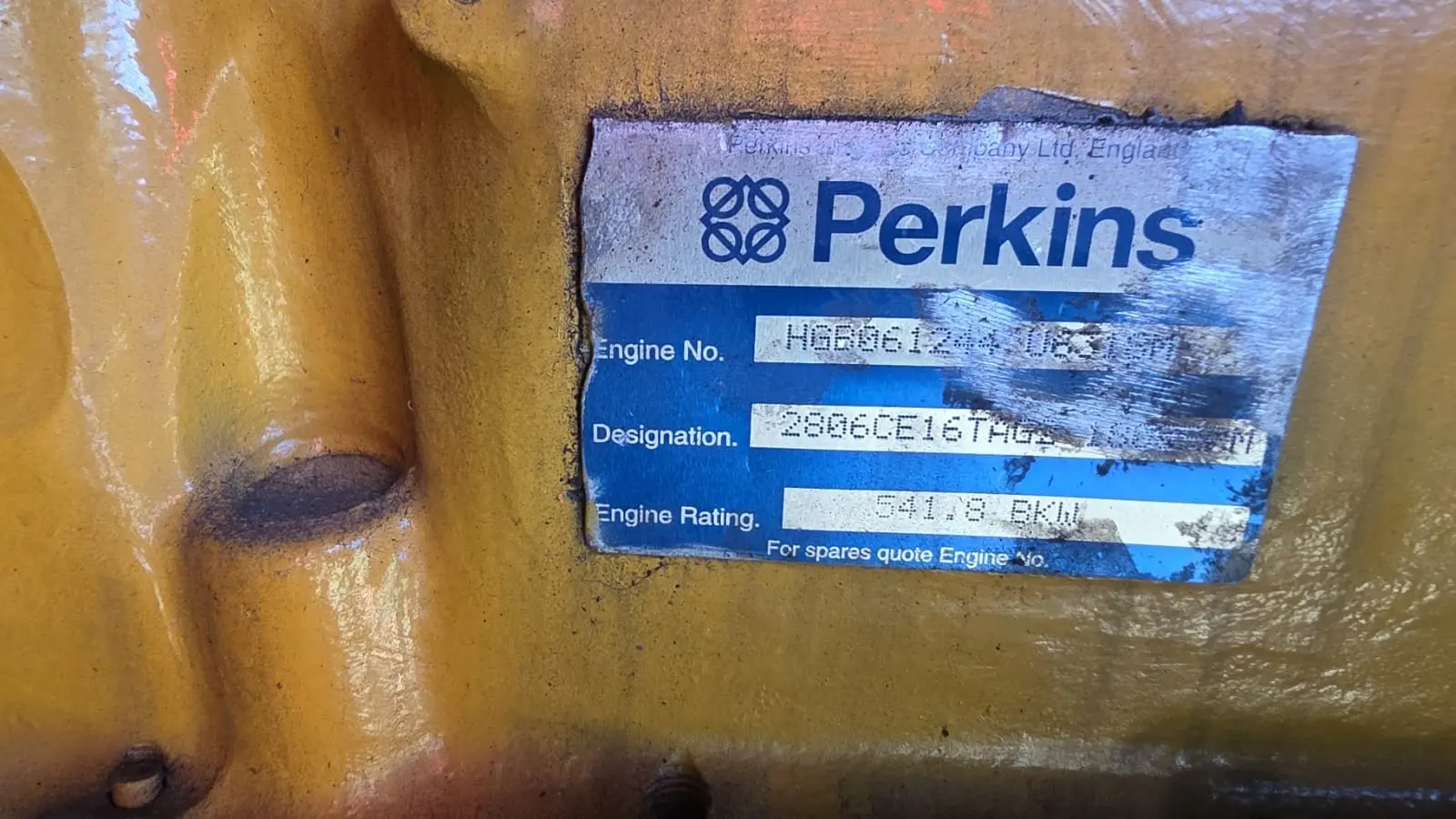
Engine nameplate as supplied by the customer: serial HGB061244U6318M, 2806C-E16 designation, 541.8 bkW rating. Click to enlarge.
Three values come off that plate and each does a different job:
| Nameplate Field | This Order | What It Determines |
|---|---|---|
| Engine No. | HGB061244U6318M | Which software file is flashed. This is the deciding value. |
| Designation | 2806C-E16 TAG series | Engine family and software description group |
| Engine Rating | 541.8 bkW | Cross-check against the rating selected in the module |
Pro Tip: Nameplates on working gensets are usually oil-stained and partly worn. Photograph rather than transcribe, and shoot at an angle that avoids glare on the stamped fields. A misread character in a serial number sends the wrong software file.
Reading the Module: What the Service Tool Shows
Once the module was flashed, it was connected to the electronic service tool and the identification page was captured. This is the record that proves the software on the module belongs to the customer’s engine.
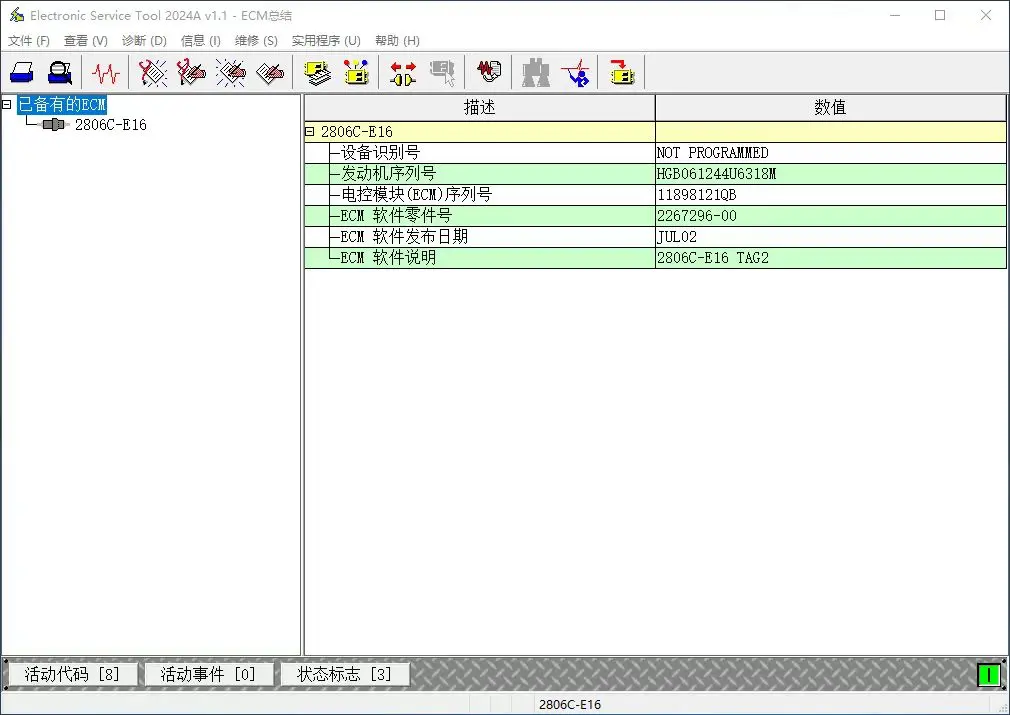
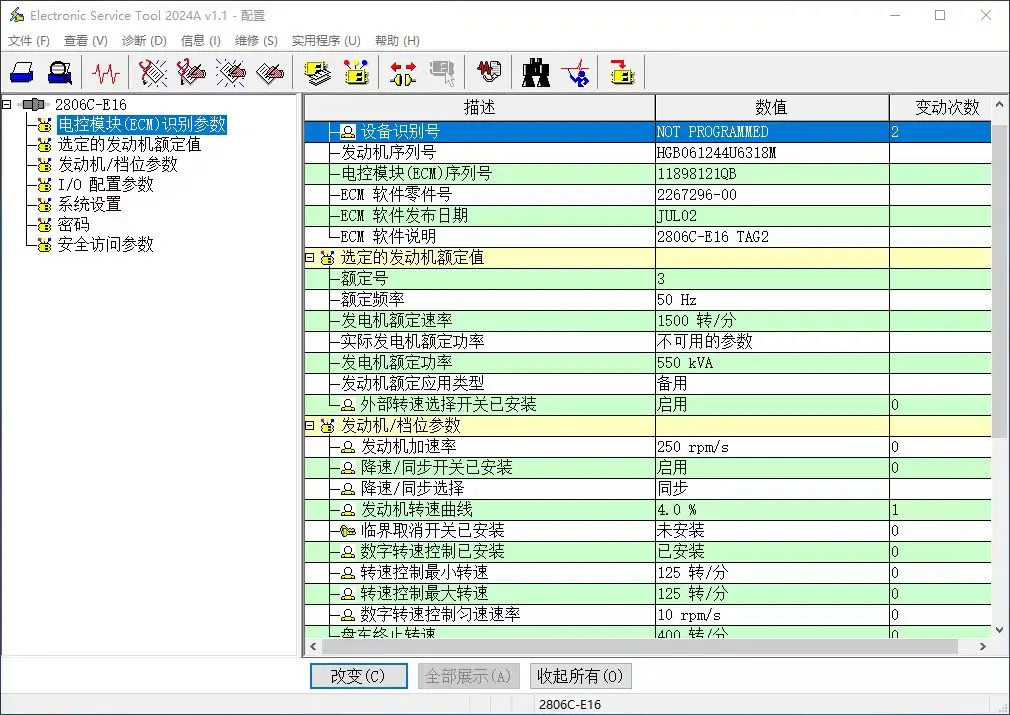
Left: module identification summary. Right: configuration parameters including the selected genset rating. Service tool interface shown in Chinese; field order matches the English release. Click any image to enlarge.
The identification page carried these values:
| Field | Value | Why It Matters |
|---|---|---|
| Engine serial number | HGB061244U6318M | Matches the customer’s nameplate exactly |
| ECM serial number | 11898121QB | Matches the number stamped on the physical module |
| ECM software part number | 2267296-00 | The file actually loaded onto this module |
| Software description | 2806C-E16 TAG2 | Confirms the engine family the file targets |
| Equipment ID | NOT PROGRAMMED | Deliberately left for the customer to set on site |
The serial cross-check is worth pausing on. The module label reads 240-5309-02 with serial 11898121QB, and the service tool reports the same serial. Physical hardware and software record agree. That is a small check, and it is the one that catches a mislabelled unit before it leaves the bench rather than after it lands in Florida.
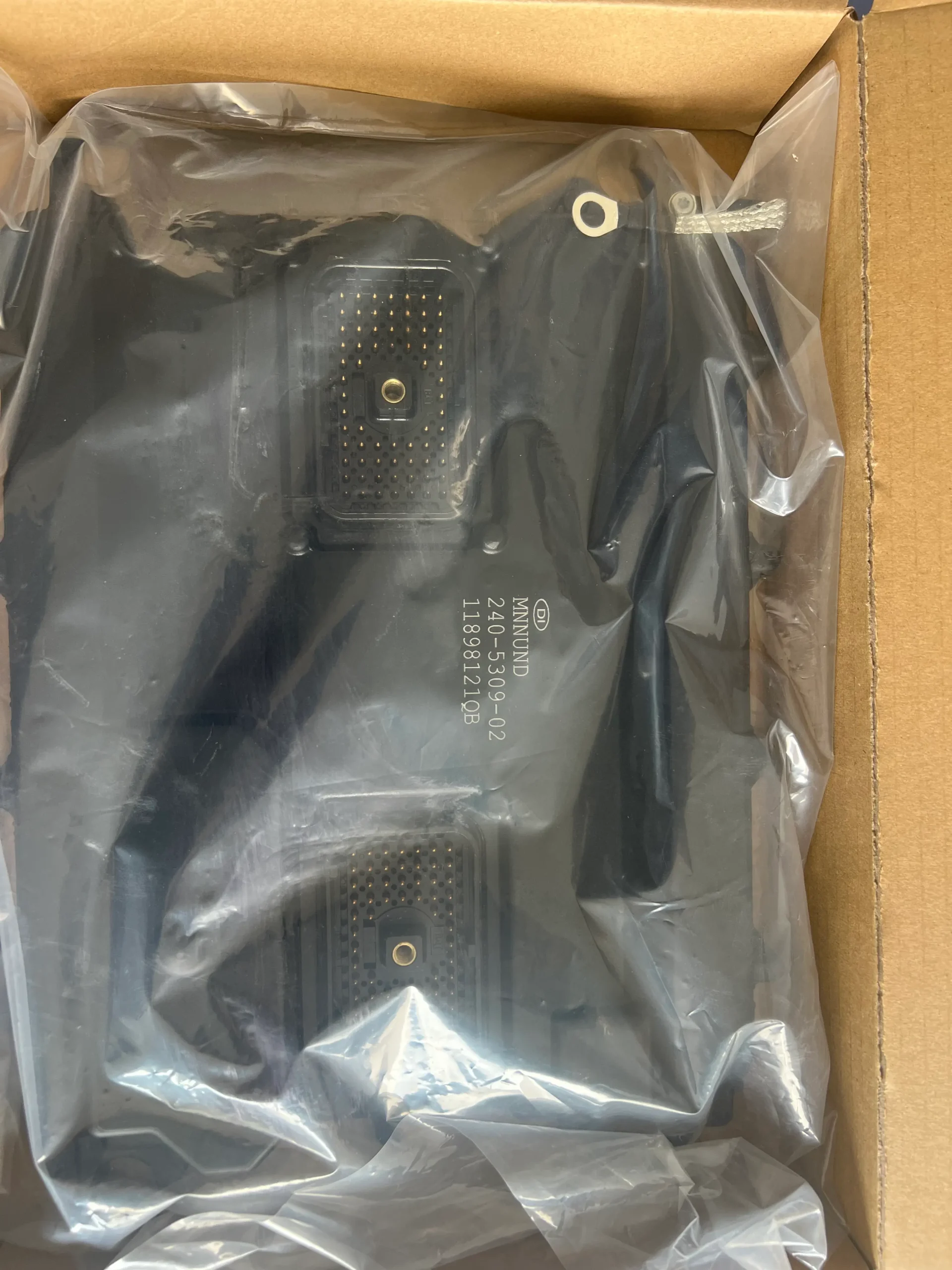
Module label 240-5309-02, serial 11898121QB, bagged and boxed after verification. Click to enlarge.
What “NOT PROGRAMMED” Actually Means
It refers to the Equipment ID field, not to the software. Equipment ID is a free-text label the owner assigns so the module reports which machine or set it belongs to. It is intentionally left blank on a replacement unit because only the end user knows what the set is called on their site.
Buyers see that line and reasonably assume the module arrived blank. It did not. The software part number, the release date, and the software description are all populated on the same screen, and the engine serial number matches the nameplate. Those are the fields that determine whether the engine runs.
Completed Before Shipment
- Software flashed and matched to the engine serial number
- Module powers up and communicates with the service tool
- Module serial cross-checked against the physical label
- Identification and configuration screens captured as a record
Required On Site
- Equipment ID entry for your asset naming
- Confirmation that the selected rating matches your set
- Any site-specific parameter adjustments
- Clearing bench codes and verifying under load
Warning: A module on the bench will show active fault codes, because no sensors, actuators, or harness are connected to it. Codes present during bench verification are expected and are not evidence of a defective unit. Judge the module after it is installed and the harness is connected.
Genset Rating Data: The Part Buyers Forget
On a generator set the module carries a rating block that has nothing to do with the engine serial number. Get the software right and the rating wrong, and the set will run but will not behave the way the installation expects.
The configuration page on this unit showed the following selected rating:
| Parameter | Value on This Unit | Check Against |
|---|---|---|
| Rating number | 3 | The rating your set was commissioned on |
| Rated frequency | 50 Hz | Your supply frequency. 60 Hz sites need the 60 Hz rating. |
| Rated generator speed | 1500 rpm | Pole count and frequency. 1800 rpm pairs with 60 Hz. |
| Rated generator output | 550 kVA | Alternator nameplate on your set |
| Application type | Standby | Standby, prime, or continuous duty as installed |
Frequency and speed are the two to check hardest. They move together, and a set commissioned at 60 Hz and 1800 rpm cannot run correctly on a 50 Hz and 1500 rpm rating. If your set differs from the values above, say so at the quotation stage so the rating can be selected before dispatch rather than corrected in the field.
Shipment Record: Florida Order
The verified module was bagged in anti-static material, boxed with cushioning on all faces, and dispatched to a Florida destination declared as one engine control module.
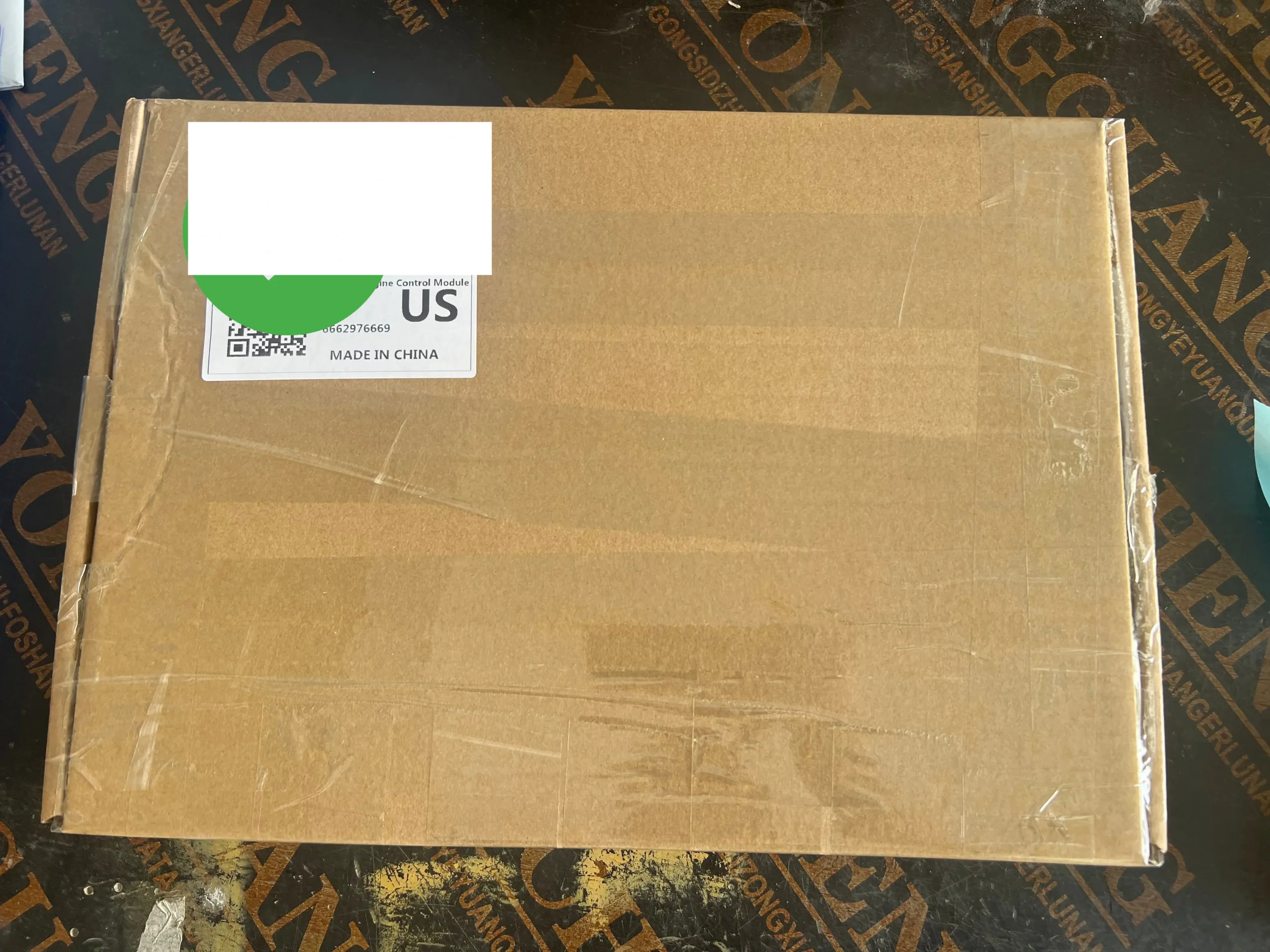
Carton sealed and labelled for dispatch. Recipient details redacted. Click to enlarge.
The whole sequence took one exchange of messages plus the programming step. Nameplate photograph in, specification confirmed, software flashed, screens captured, unit packed and gone. Orders that stall are almost always the ones where a nameplate photograph never arrived.
Cross-Reference and Application Coverage
This controller appears under more than one reference depending on which catalogue you are looking at. The numbers describe the same control position through different systems.
| Reference | Where You Will See It |
|---|---|
| 240-5309 | Control group number; stamped on the module as 240-5309-02 |
| CH12800R | Reference used in Perkins-side parts documentation |
| 2806C-E16 / 2306 | Engine families this controller is associated with |
Application coverage varies by build and serial break, so treat the list as a starting point. The label on the module you are removing, plus the engine serial number, settles it. You can view current availability on the 240-5309 / CH12800R controller product page.
All units supplied are aftermarket replacement parts. Perkins is a registered trademark of Perkins Engines Company Limited. All manufacturer part numbers and brand names are used for reference and compatibility identification only, and no affiliation with or endorsement by the trademark owner is claimed or implied.
Pre-Order Checklist
Send these six items in one message and programming can usually be scheduled the same day.
- Photograph of the engine nameplate showing serial number and designation
- Photograph of the existing module label if the old unit is accessible
- Genset rating data: frequency, speed, kVA, and duty class
- Active fault codes with SPN and FMI values if you have them
- What has already been checked, including supply voltage, grounds, and harness
- Destination address and required delivery window
With those in hand you can send them to our technical team for a programming check before committing to an order.
Confirmed orders are dispatched within 24 to 48 hours by DHL, FedEx, or UPS with tracking issued on the day of handover. Import duties, taxes, and customs clearance charges are determined by the destination country and are the responsibility of the buyer unless agreed otherwise in writing before dispatch.
Frequently Asked Questions
Why does the service tool say NOT PROGRAMMED?
That line refers to the Equipment ID field, which is a free-text asset label the owner assigns. It is left blank deliberately. The software part number, release date, and engine serial number on the same screen confirm the module itself is programmed.
Can I order a 240-5309 without giving my engine serial number?
You can order the hardware, but it cannot be programmed for your engine without it. An unprogrammed module will not start the engine, so supplying the serial number up front is what turns a box of electronics into a working replacement.
My set runs at 60 Hz. Does the rating shown above apply to me?
No. The unit in this walkthrough was configured at 50 Hz and 1500 rpm for that customer’s set. A 60 Hz installation runs at 1800 rpm and needs the corresponding rating selected. Send your frequency, speed, kVA, and duty class with your enquiry.
Should I worry about active codes shown during bench testing?
No. A module on the bench has no sensors, actuators, or harness connected, so it reports faults for every circuit it cannot see. Those codes clear once the unit is installed and wired.
Is 240-5309 the same as CH12800R?
They reference the same controller position through different documentation systems. As always, verify against the label on the module you are removing rather than relying on a catalogue cross-reference alone.
What should I check when the module arrives?
Compare the serial number on the module label against the programming record supplied with your order, then inspect the connector pins under good light before installation. Both take under a minute and eliminate the two most common post-delivery disputes.
Do I still need a technician after installing a programmed module?
Yes, for Equipment ID entry, rating confirmation, and load verification. Pre-shipment programming removes the largest variable but does not replace commissioning by someone who knows the set.
Can a replacement module increase engine output?
No. A correctly programmed module restores factory-specified performance for the selected rating. Any supplier offering power gains beyond original specification is describing something that does not belong on a standby set.
Final Word
This order came down to one photograph. A nameplate image gave the engine serial number, the serial number selected the software, and the software made a bare module into a working replacement for that specific engine.
Ask for the programming record before dispatch and check the module serial against it on arrival. Two minutes of verification at each end removes almost every dispute this product category produces.
Need a 240-5309 ECM Programmed to Your Engine Serial Number?
Aftermarket replacement for Perkins 2806C and 2306 engine control modules, cross-referenced to 240-5309 and CH12800R. Send your engine nameplate photograph and genset rating data for a programming check, then dispatch within 24 to 48 hours via DHL, FedEx, or UPS with same-day tracking and a copy of the programming record.
Check Availability & Pricing →